
Audit Advisory Committee
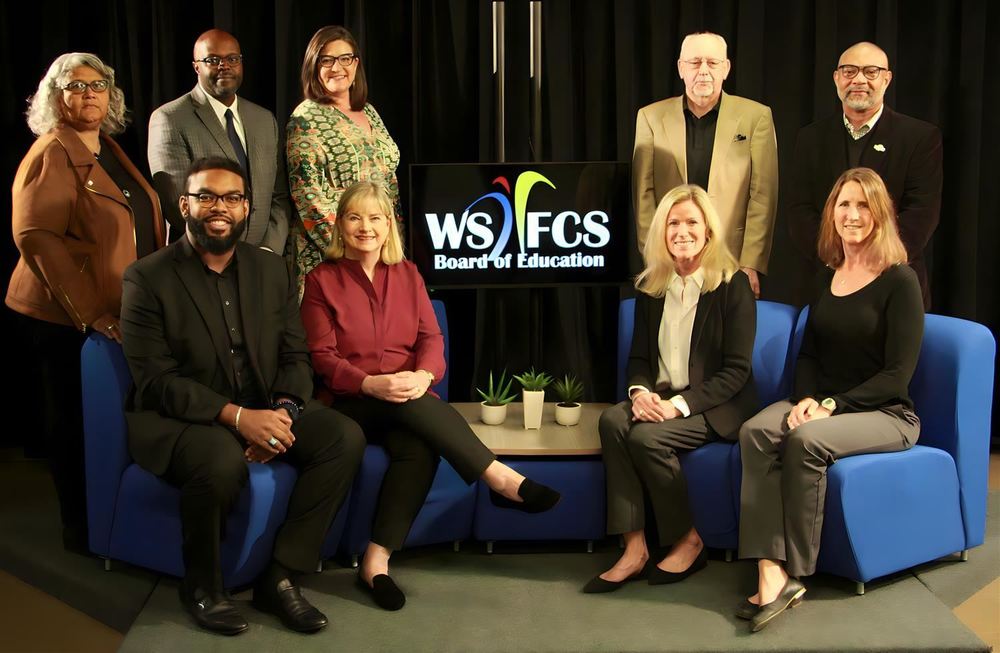
The Board of Education formally selected Lee Garrity, David Perdue, Patti Gillenwater, and Robert Gaines as members of the Audit Advisory Committee during their meeting on Thursday night.
The Audit Advisory Committee will make recommendations to the school board regarding the annual audit report and any corrective actions needed. The committee will add an additional layer of public accountability and oversight as the district works to rebuild its financial health and the community’s trust.
The school board is responsible for appointing four voting members of the committee, while three others are chosen by the Forsyth County Board of Commissioners.
The board solicited applications from the community with a deadline of February 15. After reviewing all 49 candidates, a majority of the board was confident that these members were best suited to the role.
Garrity is a retired Winston-Salem city manager with over 30 years of budgeting, auditing, and fiscal control experience. Perdue served the Wayne County Schools Board of Education for 10 years and prepared 10 consecutive balanced budgets. Gillenwater has CPA and internal audit experience, and has served on several community groups that reported to the Wake County School Board. Gaines has been Chief Audit Officer at North Carolina Central University since 2014.
The commissioners are in the middle of their own selection process and intend to make their decisions later this month.
Joining the Social Media Litigation
The board also voted to participate in a class-action lawsuit against Facebook, Instagram, TikTok, and several other major social media platforms.
Hundreds of personal injury lawsuits have been filed in federal courts and state courts against social media companies by individuals and school districts across the country. The federal court system has consolidated the cases in a Multi-District Litigation in the Northern District of California. Several North Carolina school districts, including Guilford County, Wake County, and Charlotte-Mecklenburg County, have joined in the pending litigation.
The basis of the case is the negative impact of social media on students’ mental and social health and the consequences those impacts have on education. There is no upfront legal fee to join the litigation and the attorneys who would represent WS/FCS would operate on a contingency basis. In the event of a settlement or favorable verdict, districts would share in the financial recovery.
Board Member Leah Crowley said that early court proceedings have indicated a strong case against the social media companies and that if WS/FCS participates, the district stands to make a lot of money that can be put towards helping students and undoing some of the damage.
“Listening to some of the testimonies, the intentional targeting of youth through some of the algorithms has been described as more damning than the tobacco companies,” Crowley said. “It’s real, and I think there will be a large settlement that we should partake in.”
Developmental Day Services
During its Curriculum Committee meeting, the board heard an update on the district’s plan to evaluate whether developmental day services could be relocated to other district-owned school buildings.
WS/FCS currently provides developmental day services for students with significant disabilities through an operating agreement with the Centers for Exceptional Children at The Children’s Center and The Special Children’s School. CFEC holds the required developmental day license, while WS/FCS delivers special education services, therapies, and instructional programming. This agreement places substantial operational and financial responsibilities on WS/FCS for lease payments, custodial services, utilities, maintenance, food service, and minor repairs at TCC and TSCS. If the district obtains its own developmental day license, it could potentially make use of available space at underutilized district-owned facilities and save money in the process.
CFEC would continue operating developmental day programs for infants and toddlers.
The earliest any changes would be made to the program would be the 2027-2028 school year. Families can learn more about the evaluation by reaching out to their school.
State Auditor’s Report
Superintendent Don Phipps addressed the board about a new report from the Office of the State Auditor.
The OSA issued a Rapid Response Special Report in August 2025, which examined the district’s overspending of state funds, as well as issues with reconciling budgets and reporting expenditures. The follow-up expands on those topics and looks at the terms of the district’s loan from its Child Nutrition Fund.
The district has already made significant progress in addressing the State Auditor’s concerns. The board is receiving monthly budget-to-actuals reports, staff are recording expenditures in a timely fashion, cash flow is at satisfactory levels, and bills are being paid on time. In January, the board adopted an addendum to the Child Nutrition Fund loan, and the debt is on track to be repaid this fiscal year with appropriate interest.
Dr. Phipps emphasized that district will need to remain vigilant to maintain good monetary standing. He considers the progress made since the Rapid Response Special Report came out to be an encouraging sign of what’s to come.
“WS/FCS is in a new era of fiscal responsibility,” Phipps said. “We have a balanced budget. We have practices in place to ensure it stays that way. We are on the path to recovery and long-term stability.”
The district’s response to the report can be read in full here. The board’s latest budget-to-actuals report, which explains variances between budget projections at the beginning of the year and real spending, can be viewed here. The full report from the OSA and more details on the district’s financial status can be found through the Community Budget Update web portal.
The Board of Education will meet again on Tuesday, March 17.