
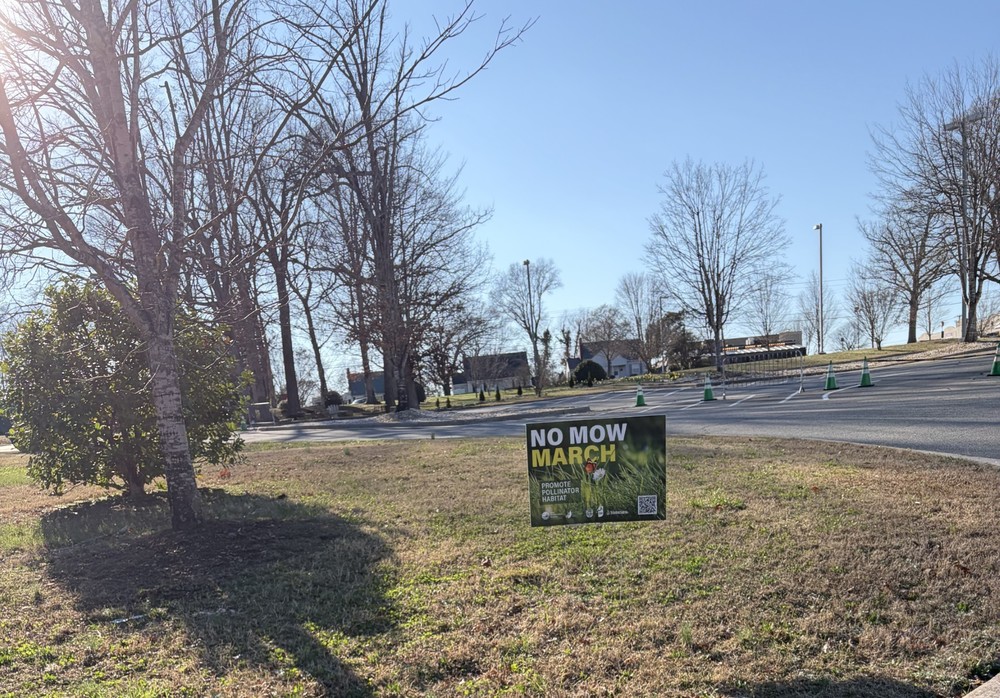
No Mow March
In North Carolina, the "No Mow March" initiative provides a critical lifeline for approximately 500 species of native bees, many of which are just beginning to emerge from their winter slumber. While honey bees overwinter as a colony, most of NC’s native pollinators—such as mining bees (Andrenidae) and bumble bee queens—hibernate solo in the upper 5 to 15 cm of soil or in the pithy stems of garden plants.
Mowing too early in the spring can be devastating for two main reasons:
Mechanical Disturbance: Mowers can compress or destroy the shallow tunnels of ground-nesting bees, which account for about 70% of North Carolina's native bee population.
Nutritional Deprivation: Early bloomers like dandelions, violets, and clover are often the only food sources available in March. Research has shown that reduced mowing can lead to a five-fold increase in bee abundance by preserving these "weeds" during the critical weeks when newly emerged queens are at their hungriest.
By keeping the mower in the shed until April, you protect the next generation of pollinators that have survived underground since the previous fall.
Take our pledge and mark your yard as a safe haven for overwintering insects! Once you've taken the pledge, pick up your free yard sign at Salem Lake Marina during operating hours. While supplies last, limited to City of Winston-Salem Residents.